

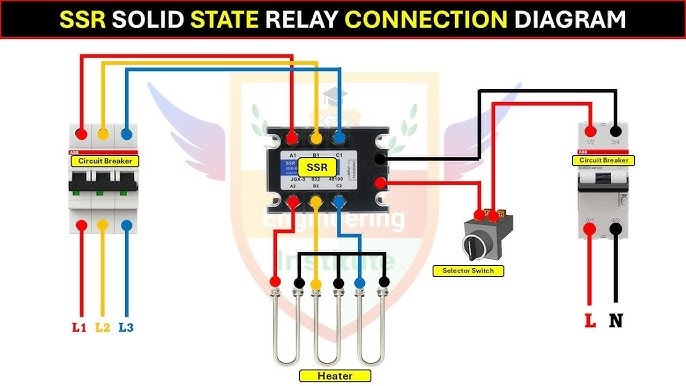
Proper installation of solid state relays (SSRs) is essential for achieving reliable performance, safety, and efficiency in control circuits. A well-understood wiring diagram serves as a clear guide for electricians, engineers, and maintenance personnel, ensuring that SSRs function optimally without unexpected downtime. Following structured wiring practices enhances both operational safety and system longevity. Technicians rely on solid state relay wiring diagram for troubleshooting.
Importance of a Clear SSR Wiring Diagram
- Ensures Accurate Connections: A detailed wiring diagram prevents incorrect connections, reducing the risk of circuit faults.
- Promotes Safety: Correct wiring minimizes electrical hazards, protecting both equipment and personnel.
- Speeds Up Troubleshooting: Clear diagrams make it easier to identify issues and perform maintenance efficiently.
- Supports Consistency: Standardized wiring practices across installations improve overall system reliability.
Step-by-Step Installation Benefits
Following a solid SSR wiring diagram provides guidance for each stage of installation:
- Identify Input and Output Terminals: Properly distinguish the control signal input from the load output to prevent miswiring.
- Observe Voltage Ratings: Ensure the control voltage matches SSR specifications to avoid overvoltage or damage.
- Use Appropriate Heat Management: Proper installation of heat sinks or thermal pads maintains SSR performance under load.
- Secure Wiring Connections: Tight and clean connections reduce resistance, preventing heat buildup and ensuring longevity.
Enhancing Control Circuit Efficiency
Wiring diagrams not only guide installation but also optimize the efficiency of control circuits:
- Minimizes Signal Interference: Proper routing of input and output lines ensures reliable switching without noise.
- Supports Automated Systems: Accurate connections allow seamless integration into PLCs and automated control setups.
- Reduces Downtime: Correctly installed SSRs minimize failure risks, keeping production lines operational.
- Facilitates Expansion: Standardized wiring allows easy addition of new SSRs or components when system demands grow.
Practical Tips for SSR Wiring Success
- Label Wires Clearly: Clear labeling simplifies future maintenance and prevents confusion during modifications.
- Follow Polarity Guidelines: Observing the correct polarity prevents malfunction and extends SSR life.
- Check Load Compatibility: Match SSR load capacity with the connected device to ensure safe operation.
- Test Before Full Operation: A preliminary test verifies that connections follow the diagram and function as intended.
Conclusion
A well-designed solid state relay wiring diagram is more than a reference it is a practical tool that guarantees proper installation, promotes safety, and enhances overall system efficiency. By following the diagram and best practices, technicians can achieve smooth operation, reduce maintenance challenges, and ensure the longevity of control circuits. Emphasizing clear connections, correct voltage application, and proper load management makes SSR integration straightforward and reliable for any industrial or automation setup. Proper attention to wiring practices empowers teams to maintain high performance while preventing common installation errors, resulting in dependable and efficient control systems.